
The Silence
by Bethany Lewis
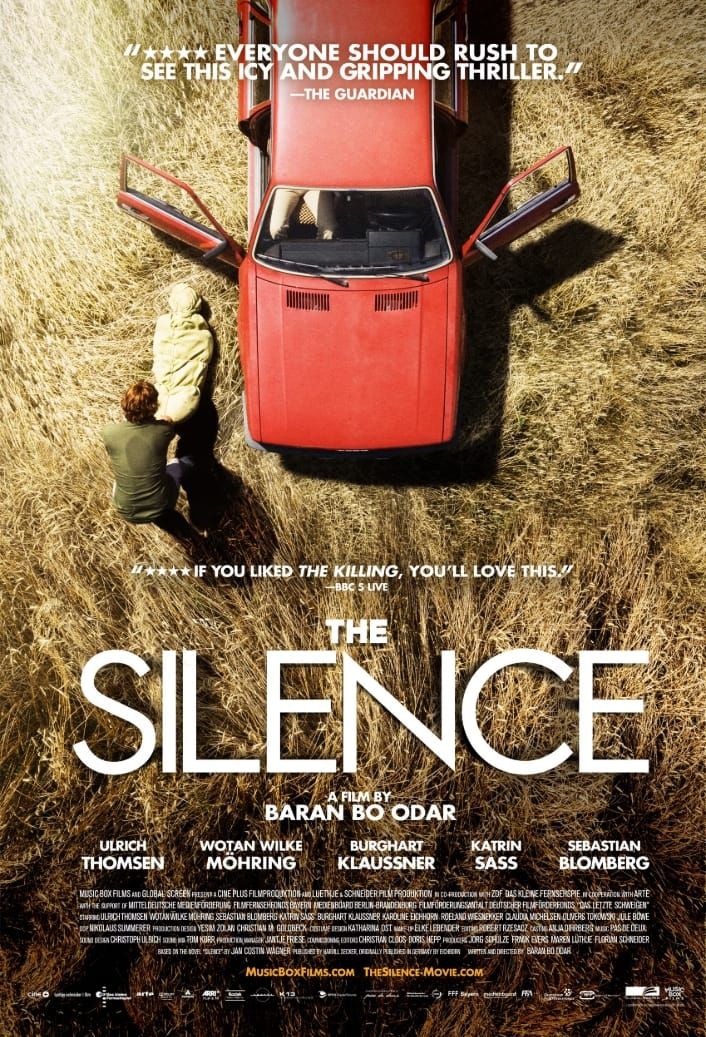
If you’re looking for an action-packed crime drama filled with guns, gratuitous violence, and improbable car chases, The Silence is not that movie. It is almost the antithesis of what one would expect of a modern crime drama – slow-paced, oddly sterile, intellectual, quirky, and little to no action, violence, guns, or car chases. It is, however, incredibly tense – more so for how deliberately slowly the narrative moves – and more than a little discomfiting. It is one of those European crime dramas that tend to make American audiences restless and uncomfortable. We long for action, constant entertainment, a clear-cut narrative, and a happy ending – none of which The Silence is willing to provide. It is also an incredibly rewarding film-watching experience, an experience that values quality composition, simple yet stunning cinematography, powerful and subdued acting, and a challenging storyline.
THE SILENCE is about a young girl who goes missing from a small German community in circumstances eerily identical to those of another young girl who was murdered 23 years earlier. This not only reopens the old investigation and ostensibly triggers the main plot of the film, but reopens old wounds, creates new ones, heals others, and challenges relationships. While there is a mystery to be solved, it is the nature of tragedy and its effect on individuals and their relationships that is the real focus of the film. Tragedy will bring people together, tear others apart, and derange some. In the end, it is also about how we relate to each other, are drawn towards each other, and about our desperate, lonely need to make a connection. It is this desperate loneliness that drives the crime to be committed, that drives two people together, that drives two people apart and drives another halfway insane.
The film is amazingly affecting and astonishingly beautiful in its visual simplicity. Danish born director Baran bo Odar deserves high praise not only for creating such a strong and thought-provoking film, but especially for producing such artistic and professional results for his first feature. While the cinematography is more than competent, it is perhaps the composition that is the most striking. Many scenes take place in long still shots, not only presenting human nature and emotion in fluid detail, but also human perception. There is shot after shot of the picturesque wheat field where the murder of the young girls takes place – not just of the location itself, but of representations of that location, both in diorama and diagram. In each scene the wheat field is presented in a different way, changing for us as the film changes us. At first, it’s peaceful, then somehow sinister, then tragic, ultimately frustrating, inspiring, mysterious, and disheartening. This single wheat field comes to signify so many things to us in the end that, like the film’s characters, we come to regard it as a place of significance in itself.
Odar also handles his cast extremely well and uses them to the best of their abilities and effectiveness. Ulrich Thomsen (THE THING, BANSHEE) is a name that may be vaguely familiar to Hollywood movie audiences and is both chilling and uncomfortably sympathetic as the neighborhood pedophile Peer Sommer. He is so pleasant, so innocently needful of the company of a kindred soul, and so devastated when those hopes are dashed, that we sometimes forget how reprehensible his actions and desires are. Also heart-wrenching is the plight of that kindred soul, Timo (Wotan Wilke Möhring), who desperately tries to repress his shameful desires, but tragically can’t help being drawn into temptation by Peer. All this is topped off by a compelling and unusual performance by Sebastian Blomberg as David Jahn, a recently widowed police inspector attached to the investigation of the missing girl. He is incredibly awkward, emotionally extreme, socially unusual, and behaviorally compulsive. All other characters are awkward around him, unsure of how to interact with him or contemptuous of him. His only constant proponent is his pregnant co-investigator, who even forgives his impulsive grab at her pregnant belly as she sleeps. It’s almost like the typical brilliant-but-damaged-or-socially-unacceptable-detective/doctor character so often seen in American television dramas, except taken to an amazing extreme. He is compelling, confusing, discomfiting, but ultimately sympathetic. In the end, he is the only one who can see the truth of the mystery, who rallies for that truth after all the loose ends seem tied up and old wounds finally healed. But it’s a truth that only he can see.