I Declare War
by Tom Jeffers
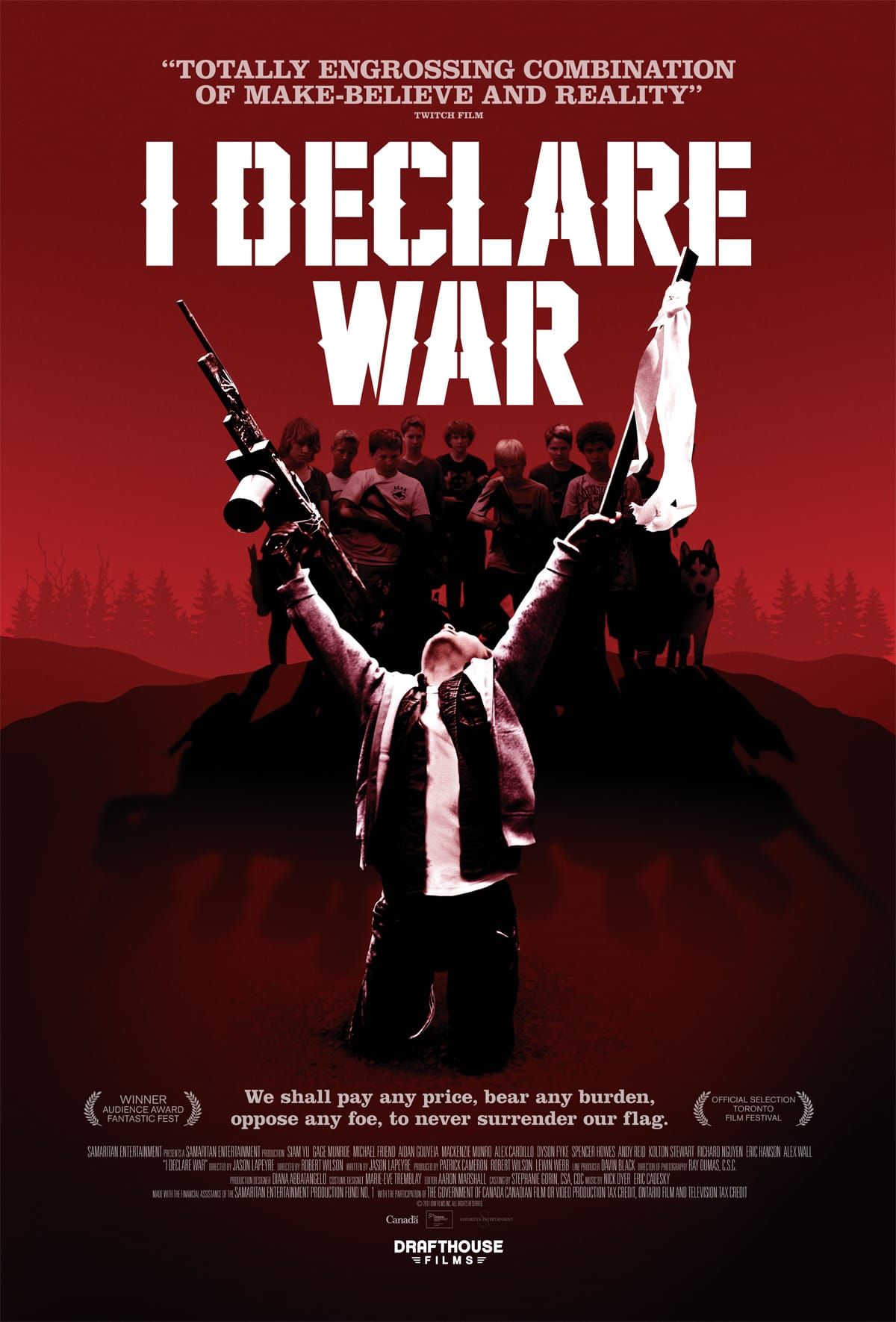
This tidy little film begins with the premise: What if kids played war and took it very seriously? The imagination used by children to make sticks into weapons is showcased in a brilliant manner in the film. Sticks are simple toys in one frame, but they become the real weapons that the kids imagine them to be in the next. No one is truly killed but the violence is very real.
At first, I was expecting a rehash of Goonies. What I found was a well scripted plot that dealt with the pains of being young while it maintained its edgy dark humor. The kids are truly dangerous creatures, but their hostility is limited to one another. The playground of the forest serves as the backdrop for the film that showcases every preteen emotion from emerging attraction to the opposite sex, fear, jealousy, to the desire to fit in. One could say that the film is ultimately successful because of this much capsulized version of adolescence.
The performances are of a grand quality, and I think we will likely see some of these young people in the future of cinema. I Declare War was truly an unexpected piece that left me thinking about it for days. The grim nature of the game played by the children really stands out as a symbol for what sometimes goes on the hearts and minds of youth. Life is tough at that age, and all of us ramble through it with at least some difficulty. The film has disturbing violence that does not end in death. It merely ends in pain. This mirrors what we normally see in reality with bullying and the difficult time many young folks have growing up. The only thing that truly bothered me was the amount of cursing that came from these children. I am not naïve and know some kids talk this way but generally not in front of adults. That, in and of itself, had a potent shock value.
I Declare War is a brilliant film that seems to me to be intentionally symbolic of the reality that children face on a day-to-day basis. I think the metaphor of war is perfectly used to drag this issue in front of the crowd, and it forces us to look on the grim side of youth. Perhaps they are the best days of our lives, or perhaps they are not.