
Tiny Furniture
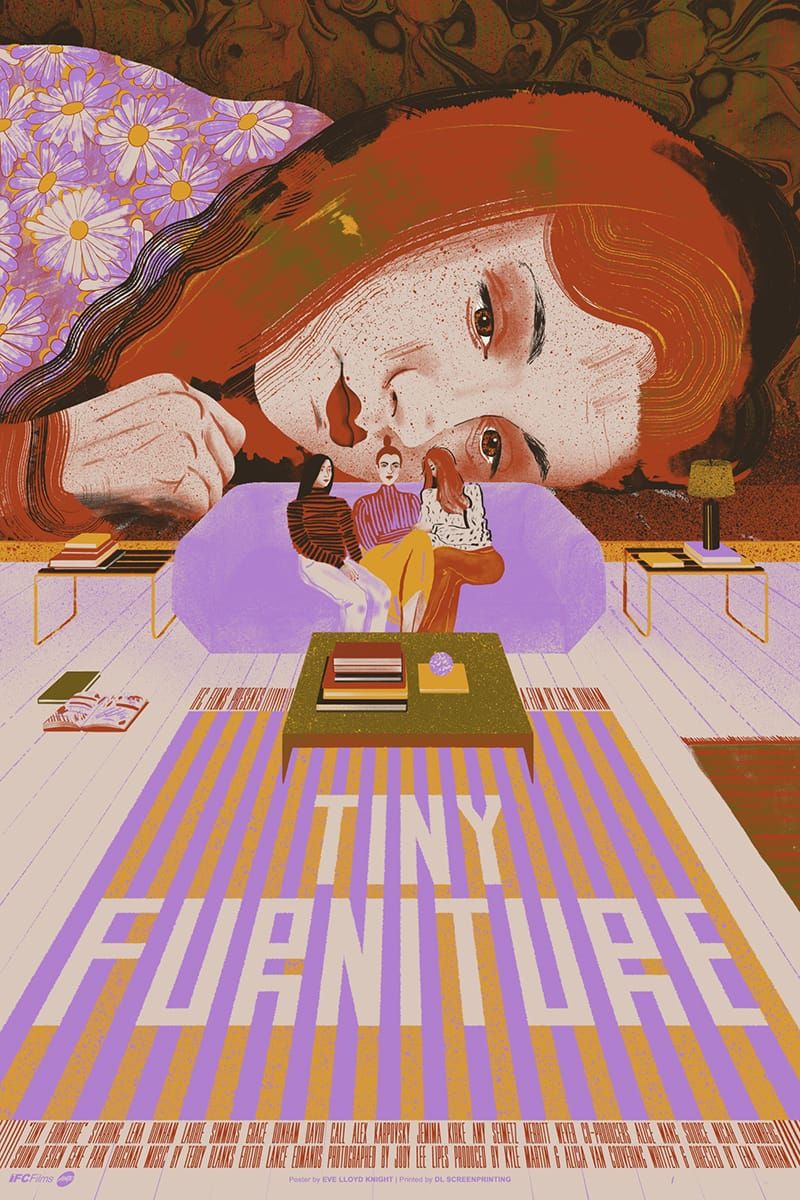
by Mesh Flinders
TINY FURNITURE, Lena Dunham’s second feature, is a self-assured, witty, and insightful entry into the post-college-film oeuvre. Although it isn’t as satisfying as micro-budget hits like HANNAH TAKES THE STAIRS and PUFFY CHAIR – which it is clearly influenced by – it is nonetheless an entertaining and heartfelt sophomore effort.
The film begins with Aura, played by Dunham, returning home to her photographer-mother’s Soho loft for a respite from a bad breakup and to indulge in a general, post-college malaise. She’s in a funk – searching for that un-nameable it all post-college movie protagonists seem to be searching for. When she can’t find it, she settles for lust, friendship and the comfort of family instead.
TINY FURNITURE has quite a bit in common with the films of Andrew Bujalski and the Duplass Brothers, though it doesn’t quite reach their level of depth or originality. Fans of these films will recognize the improvised dialogue and strong naturalistic performances that have come to characterize mumblecore. Dunham’s performance is the film’s strongest – there is not a single emotion her putty-like face can’t convey. She shambles through scenes with a clumsy grace reminiscent of Chaplin’s Tramp – albeit a postmodern one since she is clad in no more than underwear and a t-shirt in many scenes.
The film is most effective when Aura is sharing the screen with her mother, played by Laurie Simmons, and her sister, played by Dunham’s real life sister Grace Dunham. The scenes with these three characters come alive with a level of detail and intimacy that makes me think Dunham has been scribbling notes on her family squabbles for years. Neither mother, nor sister, make any secret of the fact that they are unwilling to have their busy lives interrupted by Aura’s existential crisis. Aura reacts to this by seeking their attention in more and more outrageous ways – like strutting through her sister’s high school, house party naked.
Aura wants help, she just doesn’t know what kind, where to look for it or how to begin to ask for it. When her mother and sister tune her out, she seeks support from three troubled characters – a hard-partying friend, a lonely sues chef, and a self-absorbed filmmaker. Unsurprisingly, she doesn’t find what she’s looking for and has to make do with weed, rough sex and pillow talk respectively. These supporting characters are, unfortunately, not drawn as sharply as Aura’s mother and sister, but take up equal amounts of screen time.
The relationship between Aura and her mother was the one I found most captivating. When Aura finds and reads her mother’s old diary, we see instantly that she is a tough woman who has faced similar predicaments to the one her daughter is in now…Which makes us wonder, why is she so unwilling to help? Perhaps it’s because she knows from experience how transformative navigating troubling waters on your own can be and wants Aura to have that experience herself.
In the end, what kept me from loving TINY FURNITURE despite its considerable strengths was the lack of resolution it provided for the various conflicts it introduced. Ask a mumblecore filmmaker (as I have, many a time) and they will tell you that this is the charm of the sub-genre—that it doesn’t provide easy answers or neat endings like Hollywood because those endings are unrealistic. I couldn’t agree more. But there is a subtle difference between the kind of ambiguity achieved at the end of HANNAH TAKES THE STAIRS, where you know a character has changed but aren’t sure whether or not they can sustain that change, and the feeling I had at the end of TINY FURNITURE where I felt like the main character was about to change and we were missing it.