The Long, Slow Death of a Twenty-Something
by R.C. Varenas
Douchebag or Dungeons and Dragons?
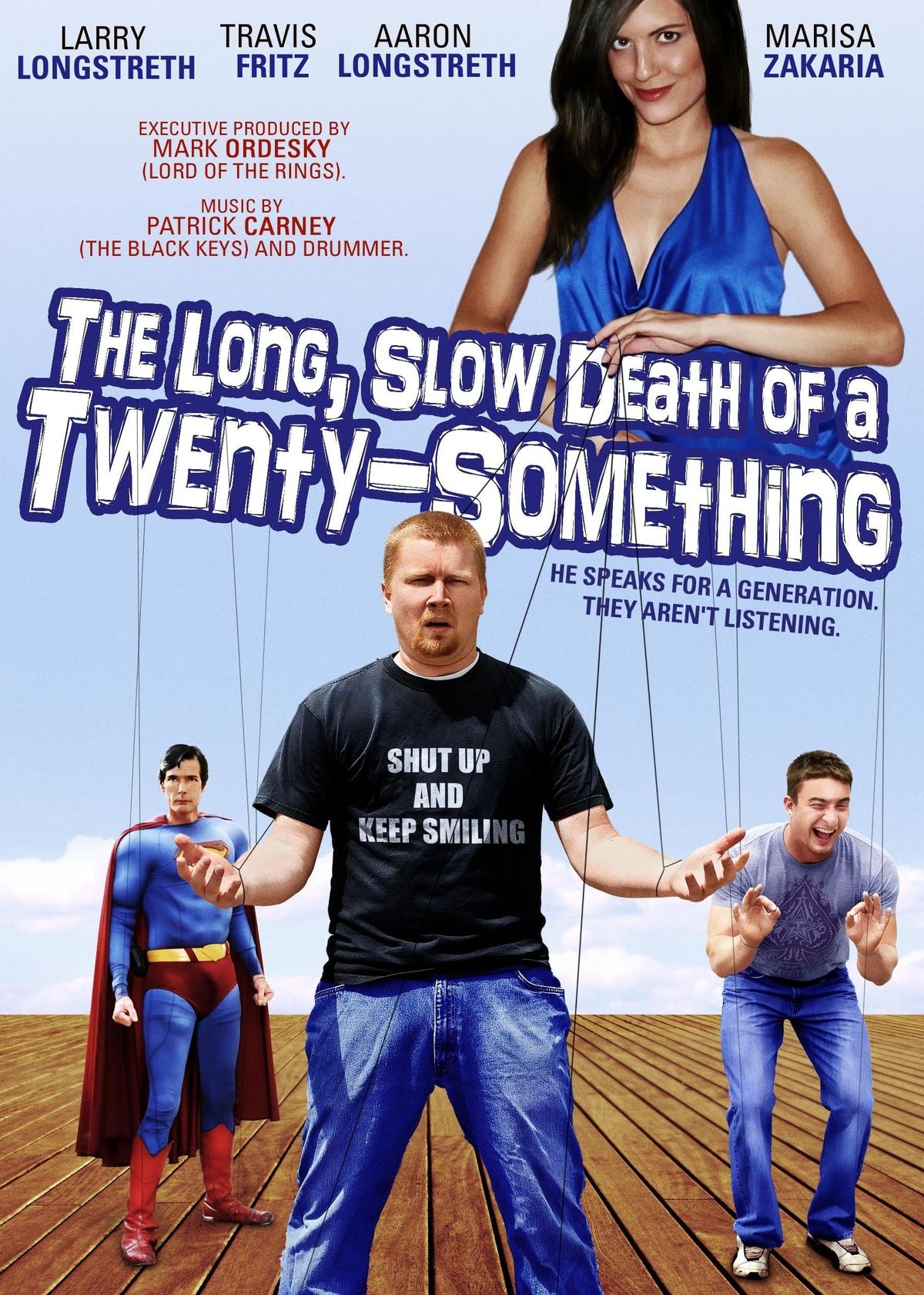
Isn’t that a question any 20-something guy asks himself at least once in his life? It’s exactly what Ben Baker asks himself in the comedy THE LONG, SLOW DEATH OF A TWENTY-SOMETHING, after being dumped by his longtime girlfriend. Is it time to put aside his boyish stupidities? And if it is time, what does he replace his bongs and video games with?
In trying to win back his girl, Donna, Baker, played by writer/director Larry Longstreth, opts for the pink shirt, popped collar, sunglasses day and night approach.
And it works. But at what cost?
THE LONG, SLOW DEATH OF A TWENTY-SOMETHING is a look at the second coming of adolescence, the twenties, when we all demand to be taken seriously but refuse to do anything about it. Baker works at a video game store, dresses in raggedy T-shirts adorned with the Legend of Zelda and does little more than kill time with his stoner friends who sleep on his couches. Being dumped serves as a wakeup call for him, and he aims to do something about it.
There’s nothing particularly new about THE LONG, SLOW DEATH OF A TWENTY-SOMETHING. The story’s been told before. It’s Kevin Smith and Seth Rogen with a whole lot more f-bombs for good measure, yet somehow Longstreth’s film is a success. It works in every possible way.
Much of the credit has to be given to Longstreth’s script, which, at 70 minutes in length, keeps chugging along at a crisp pace without leaving us feeling cheated. Miraculously, amid the tight script are several wordy Woody Allen-esque examples of Longstreth’s comedic genius. His diatribe on Italian food comes to mind, as does the clever Cracker/Cracka scene in the video store.
The film isn’t just a series of punchlines and bong hits. There’s reflection and sentimentality to boot. And Baker’s moment of clarity, when he questions how far he’s gone, is perfectly timed and believable.
This isn’t a film where characters are deeply developed, exposed, and examined. It doesn’t have to be. It’s a comedy with purpose. It’s a platform for Longstreth to stand on, a medium for him to rant about the shit that pisses him off, that pisses most of us off, as we trek along into an adulthood, we all push off to the side. Those aren’t real cowboys dad, they’re drama majors.
Ingenious.
The film starts out (and is revisited several times) by an out-of-context scene involving Ben, an examiner, and a room full of Ben’s peers. On the wall is a square, a red square. Yet when asked what color the square is, Ben’s colleagues all say “Blue,” much to the delight of the examiner.
On his first go around, Ben obliges, calls the square blue. Not so his second time around. He doesn’t want to keep quiet, doesn’t want to go with the herd.
It’s an interesting metaphor Longsreth uses, because it’s reminiscent of THE MATRIX. Which pill, Neo? The red or the blue? Is Longstreth trying to say we’re all living a fantasy? That we’re not real? We’re just a herd of posers dressed in pink, popped-up collared shirts with oversized sunglasses and fake tans?
Maybe.
Or maybe it was an homage to Superman, the comic-book hero who is anything but heroic at Baker’s lowest point of the film.
Either way, no one will say they became wiser from the film. But most will agree with Ben’s rampages, and some might argue with his final conclusion.
And maybe, just maybe, a few will walk away happy for having watched this film.