Much Ado About Nothing
by Bethany Lewis
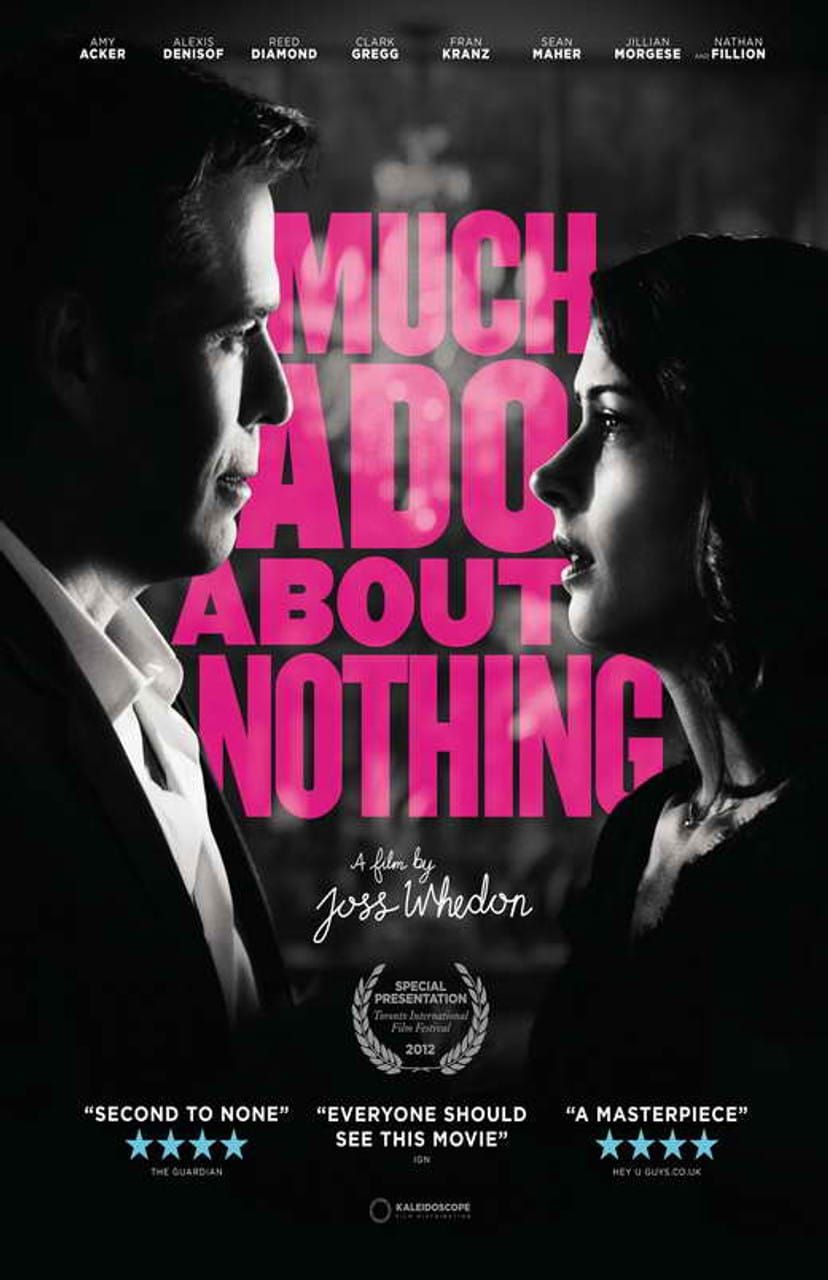
There are many things that set Joss Whedon’s adaptation of MUCH ADO ABOUT NOTHING apart from some past productions of Shakespeare’s famous comedy, but what stands out is how naturally the language flows into casual conversation, how effortlessly the relationships are established through these interactions, and how ultimately relatable we find the language as it is performed. As with any Shakespearean adaptation, much of the credit comes down to the genius of the original text itself, but as any Shakespeare lover or scholar can tell you, the infinite adaptability of Shakespeare’s works and the timeless relevance of the issues tackled in them can inspire any number of hackneyed, brilliant, bizarre, poignant, misguided, or timely variations. Whedon is to be credited not only for his excellently funny and heartfelt adaptation and stylish directing, but for the brilliance of his casting and the use to which he puts his actors.
The plot of MUCH ADO ABOUT NOTHING should be familiar to even the most casual of Shakespeareans. Don Pedro (Reed Diamond) returns from a successful war with his top soldiers, Benedick (Alexis Denisof) and Claudio (Fran Kranz), his melancholy and troublemaking half-brother Don John (Sean Maher) in custody. They come to the house of Leonato (Clark Gregg) – presented here as not only a happy reunion between friends, but as good PR between two important public officials – to rest and celebrate their victory. Claudio immediately falls in love with Leonato’s daughter, Hero (Jillian Morgese), while Benedick resumes his friendly war of wits with Hero’s spirited cousin Beatrice (Amy Acker), and Don John plots mischief and revenge. The rest is a comedy of love mixed with dramatic betrayal and tragic misunderstandings – but as with any Shakespearean comedy, it all ends with a wedding.
The first thing a good Whedonite will notice is that MUCH ADO ABOUT NOTHING, apart from it being a passionate, enthusiastic, and artistic labor of love, might just have been an excuse for Joss to have all his best friends over for a twelve-day party. Alexis Denisof and Amy Acker played tragic lovers on Whedon’s TV series "Angel", Sean Maher is from "Firefly", Clark Gregg from THE AVENGERS, Fran Kranz from "Dollhouse" and CABIN IN THE WOODS, and the inimitable Nathan Fillion from "Buffy the Vampire Slayer", "Firefly", and "Dr. Horrible’s Sing-a-long Blog". There’s even a surprising appearance by comedy duo Nick Kocher and Brian McElhaney (otherwise known as BriTANicK), on whose online series Joss Whedon made his own surprise appearance. There’s more where that came from, too. If Whedon knows anything, he knows these actors and what their strengths are. He knows Denisof and Acker have chemistry, he knows Maher can give off a discomfiting sinister blandness, and he knows Fillion will happily play the hammy, cheesy fool. It practically goes without saying that everyone is perfectly cast and that each gives their best, most compelling performances. These actors, the characters they play, and how they interact with their fellows is truly a joy to watch.
Whedon is also a master of style and grace. MUCH ADO ABOUT NOTHING is filmed in an elegant black and white, which suits the atmosphere of the film beautifully. The black and white somehow makes the party scenes seem much more lavish, classier, and yet more intimate. The mixture of a brilliantly lit, picturesque backyard in the moonlight, a pair of graceful aerial dancers swinging from a stately tree, the clink of glasses, the flow of champagne, the mingling and revelry of masked figures, and Whedon’s melodic arrangement of Shakespeare’s “Hey Nonny, Nonny” all combine to create a sort of glamorous circus, a timeless, magical world of anonymity and intimacy. At the same time, the use of black and white seems to make the dramatic scenes that much more honest, the emotions laid bare, unencumbered by color or excess.
Whedon has always been a master of tears and laughter, a writer of smart, witty one-liners and hilarious situations, but also an honestly painful writer of deepest tragedy and oft ignored issues. "Buffy the Vampire Slayer" was always more than a fantasy about a girl who fought vampires; it was simply about a girl – a girl who had to balance what she wanted with her responsibilities, who had to face the challenges of growing up, who faced love and loss, who had friends and family. That is why Whedon is perfect for MUCH ADO ABOUT NOTHING, a comedy with a layer of heartfelt love and terrible betrayal. He knows how to mix the laughs with the tears in order to heighten the effect of each, until we don’t know whether we’re laughing or crying – or maybe both.