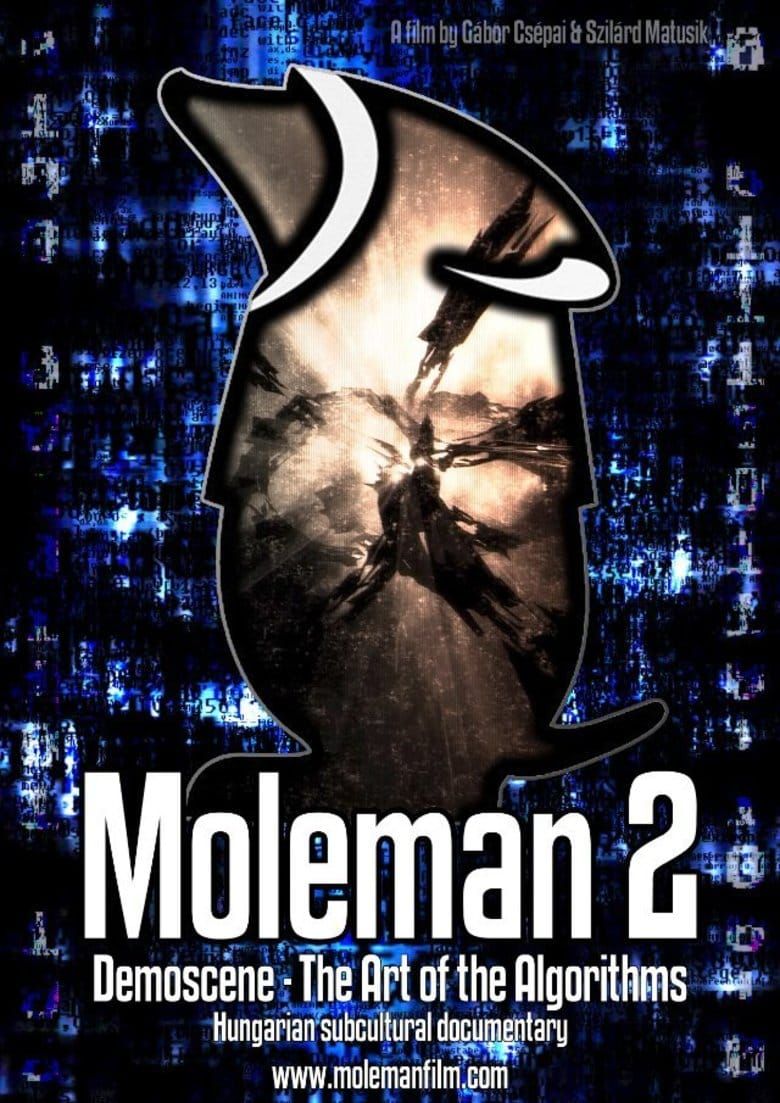
Moleman 2: Demoscene - The Art of the Algorithms
by Bethany Lewis
The official Wikipedia page for demoscene defines it as a “computer art subculture that specializes in producing demos, which are audio-visual presentations that run in real-time on a computer. The main goal of a demo is to show off programming, artistic, and musical skills.” While this is exactly what this highly specialized underground culture does, this succinct definition hardly encompasses or conveys the extent of the technology, artistry, dedication, and social culture of this group of people or the work that they do. And one thing that this documentary does wonderfully is to delve into this strange world of computer art, not only providing detailed technical demonstrations of how different types of code work but also brings us into the culture through experiential footage and extensive interviews with prominent members of the demoscene. While the film itself is purely functional, both technically and stylistically, its formulaic structure merely draws our attention away from the filmmaking and focuses our attention on the film’s subject.
Demos are rather like experimental films created through computer code. While they are like film in the sense that you can watch and listen to them and that they are, in a sense, produced and directed, they are actually executable computer files – programs that you run on a computer like MS Word or Solitaire. They are created not through the combination of video and audio files, but purely through lines of code – just combinations of letters and numbers that render image and sound. The point of these demos is to push the boundaries of a given technology and create something both artistically and technologically exciting. Some push the known boundaries of older technology – like Commodore 64 or Amiga – and others work with newer technologies like PCs. Both try to create amazing images that move and bend in fascinating ways that perhaps were thought impossible to produce on their given platform.
The demoscene started out as a group of computer hackers who cracked games and left “technological graffiti” by recoding the game to create special intros. The practice evolved beyond just leaving a fancy tag in a game and became focused on creating more elaborate and technologically impressive intros. Even so, this subculture of technological artists retains an air of the graffiti artist about them. They somehow seem like technological pirates, or high-tech punk rockers – despite the mousey, socially awkward stereotype of the typical computer coder, demosceners possess a touch of the rebel. And it certainly shows in how the film is able to capture their sense of style – all techno-rock or dubstep, hanging out in improbable basement cafes decorated with old wires, computer screens, and keyboards in a tangle of post-apocalyptic steam punk junk. They are hardcore about their scene, talking about competition size categories as if they were marathons – making 4K or 64K demos. Their demoparties aren’t just for networking, workshopping, competing, and collaborating either – they’re for partying too. And based on the amount of vodka seen sitting casually just side-frame, it looks like they know how to party.
And there is a real necessity for community in order to keep the demoscene alive. Small and specialized as it once was (participation in the largest demoparties only reached just over a thousand at its height and averaged 150-200 for the smaller parties), the scene is getting smaller – partly due to its most active members spending more time on family or jobs, and partly due to the extreme technological advances in computer generated imagery. The demos being created today seem much less impressive compared to the daily discoveries being made in the scene during the 90s, and far less impressive still compared to like likes of Toy Story and Avatar. The new generation just aren’t being pulled into the scene the way they used to – the potential for discovery and advancement is beginning to fade. But as the narrator of the film tells us: it’s up to us what happens to the demoscene, whether it continues to grow or fades into non-existence. Perhaps there just needs to be a revision of rules, a new platform to experiment with, or a groundbreaking new style that just has to be followed up. Overall, the documentary really does something to draw us in to the demoscene. Perhaps what the demoscene needed was this film to tell the world about its existence, to inspire us to create something new, challenge us to design something amazing, and encourage us to create our own scene.