Howl
by Cine Noir
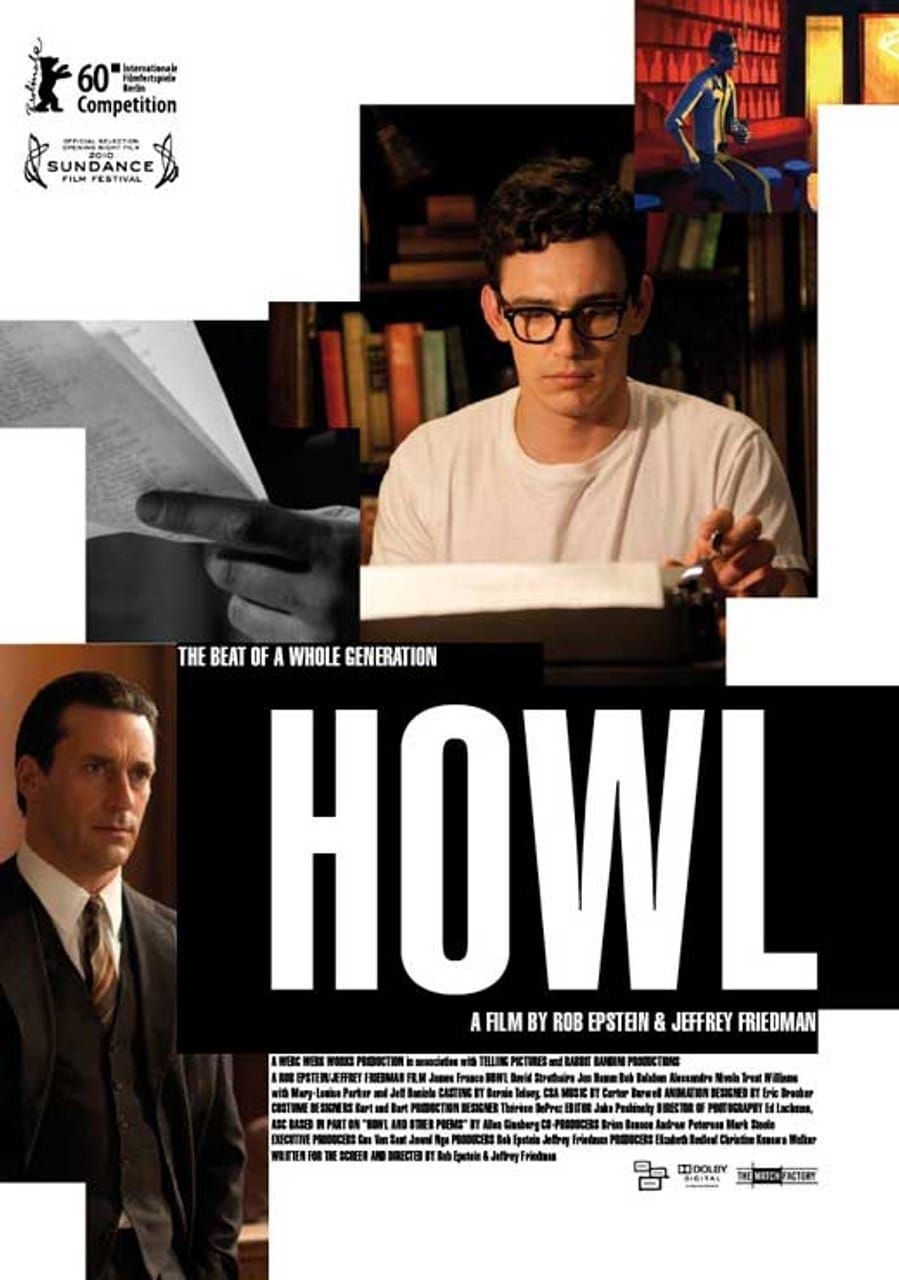
Opening to a smoky black and white haze stylistically expected of the Beat generation, long-time documentary makers and novice feature filmmakers Rob Epstein and Jeffrey Friedman’s HOWL unashamedly celebrate and visually contextualize the influential impact of Allen Ginsberg’s epic poem through a mixture of equally brash imaginary and insightful entwining multi-layer narratives about the period, the poem and the poet.
In the spirit of the Beat generation, the prequel to Howl’s literary fame and infamy, a clean-shaven Ginsberg’s monochrome reading to an audience of fellow Beats becomes a hallucinogenic imagining, setting Ginsberg’s black and white words into a contradictory plethora of surreal color and a rhythmic cacophony of sensory dislocating animation; at times polarizing and fragmented, but captivating and pulsating in electrifying HOWL into visual life. The third narrative is an interview with a reflective, now acclaimed, and bearded, Ginsberg, set two years after the publication of Howl.
The final narrative moves from Ginsberg’s own personal life and private reasons for writing Howl to the very public and famous trial surrounding the controversy and morality of the poem, the only narrative space that Ginsberg doesn’t appear or contribute. The trial scenes are equally insightful and focused on the in-court dueling between Jon Hamm as defense attorney to Ginsberg’s publisher and David Straithaim; although this performance, along with Jeff Daniels and a brief (and forgettable) cameo by Mary-Louise Parker as advocates of ‘literary excellence’ was safe – Jon Hamm effectively (re)playing Don Drapers. However, it is the closing statement and the arguments for and against the censorship of Howl, which demonstrates that freedom of speech and artistic expression is still topic of relevance and controversy today as it was fifty years ago.
Due to the different narratives intertwining within each other, the differing style for each narrative aids a profound understanding of poem before, during and after its literary conception. But excuse the cynicism, yes people, this is a film about the poem, not a biography about Ginsberg’s life; the clue is in the title. So, for those expecting an insightful exploration of Ginsberg’s life, expect some disappointment, however, that isn’t to say nothing is learned about Ginsberg the person; his struggles with his homosexuality, his institutionalization, and his mother’s institutionalization are explored, but are subjects merely glimpsed in context and relation to the poem.
Despite the criticism aimed at the film, documentarians Rob Epstein and Jeffrey Friedman should be congratulated for the beautiful manner in which they have created an entrancing visual feast to partner an equally engrossing poem. However, with the acceptance of the trial narrative, HOWL is effective James Franco’s one-man show, almost seamlessly capturing Ginsberg’s mannerism and being, from his intonation during his spirited reading of Howl in the monochrome café, down to Ginsberg’s sensitivity. It has been a long time coming, but Franco certainly has something to shout about.