Film Hawk
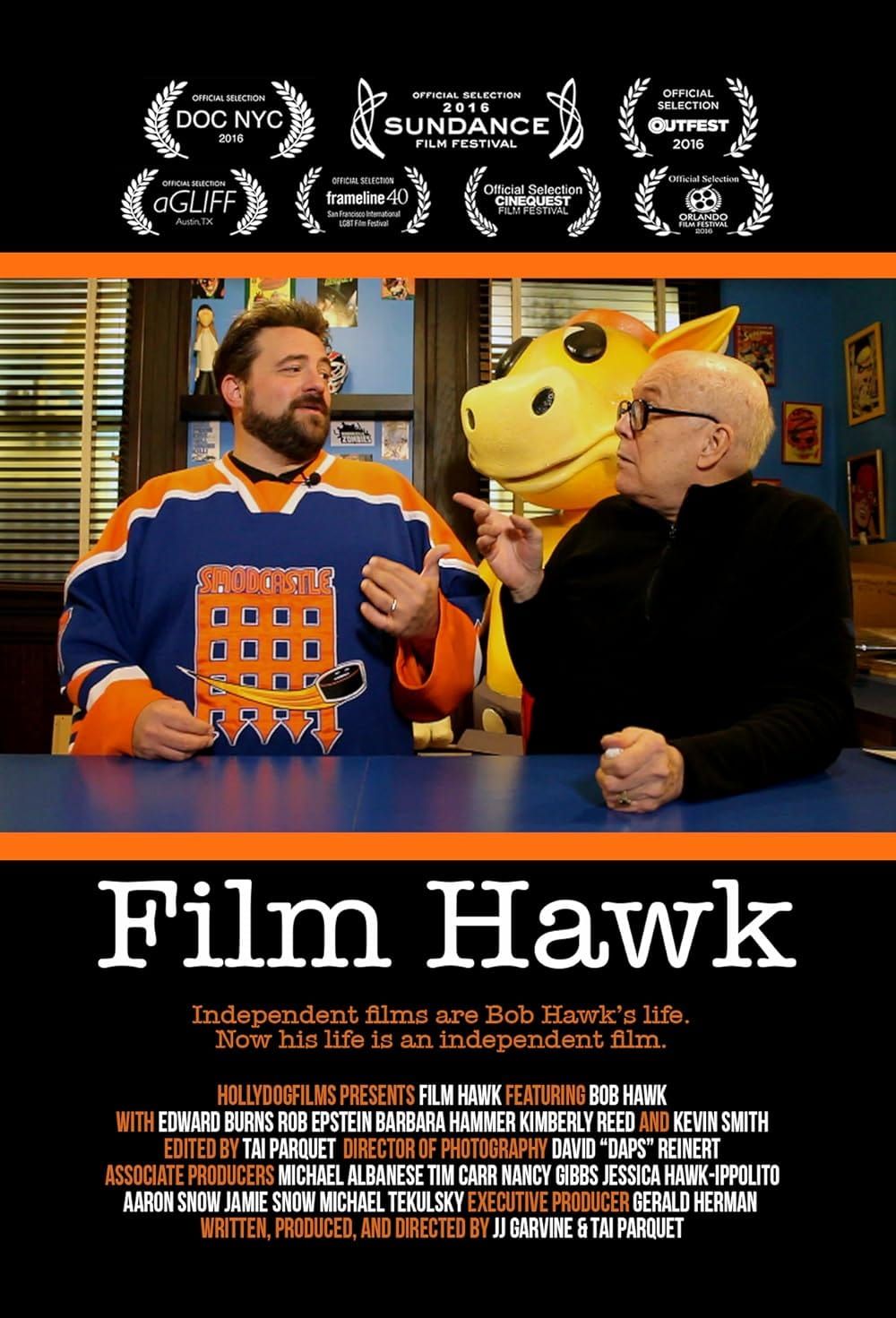
It is almost impossible for me to separate my admiration for FILM HAWK’s subject, Robert (Bob) Hawk, from the film itself. Watching this documentary feels more like watching your grandfather’s home movies rather than watching a doc about one of the most influential independent film personalities in the last half century. From his early childhood to his later years, one word can be attributed to Bob that succinctly summarizes his life. Support. From his support for the independent film industry as a whole, to the support of the LGBTQ community, Bob is defined by his drive to see people succeed in their goals and realize the life that they deserve.
FILM HAWK chronicles the Bob’s humble beginnings as a preacher’s child, to his early speech issues, the movie that sparked his interest to enter the film industry, THE WORD IS OUT, to his involvement with the Oscar winning film THE TIMES OF HARVEY MILK. From there FILM HAWK starts to define Bob’s role as a film consultant, and his involvement with many filmmakers and projects over the course of his career.
One thing that is evident as you go through this documentary is how emotional people get when they speak about Bob. Kevin Smith tears up as he recalls a story of screening CLERKS at the IFFM at the Angelika Film Center in NYC and how the screening was a disaster in terms of audience size, but somehow the word had gotten out to some of the most influential press and other people in the independent film world, which led to Smith’s eventual acceptance into the Sundance Film Festival, and launched his career. Scott McGehee, David Siegel, directors of WHAT MAISIE KNEW got similarly emotional when talking about working with Bob.
The overall narrative arc throughout this movie is that Robert Hawk gives a voice to those that haven’t had the opportunity, funds, or presence in the mainstream world. Over and over filmmakers are interviewed and talk about how they discovered new avenues to get their films seen due to Bob’s guidance and advice. Bob specializes in finding talented people, curating interesting work, and connecting those people and work with others who can help that work flourish. It doesn’t seem to matter to Bob whether the films he works on are gay, bi, trans, or straight stories. He seems to just be attracted to the passion in the person, or the story. The pride he exudes for the films he has left a mark on can be felt through the screen. These are his children.
The one real negative of the film are some inconsistencies as to how their subjects are introduced and interviewed from a stylistic perspective, but other than that, there really isn’t much to fault the directors, JJ Garvine, Tai Parquet on. They found a film subject that is not only compelling but also has a storied history outside of himself. Their portrayal of Bob Hawk is honest and heartfelt. It’s not often that someone gets a movie made about them for just doing nothing more than their job. The barista at Starbucks can’t make my coffee properly out of some ironic sense of inequality, but Bob Hawk does his job, not because of any acclaim he might glean from it, but because that’s his job, and he loves what he does.