...Around
So, this review is going to work a little different. Normally you’d see my tubby ass standing in front of the camera ranting about what I think of this or that. Generally that is all well and good. Even for this film, I donned my guise as The Film Snob and took one for the team. But in reviewing the half hour of footage that was shot, I realized that in a video format, I could not articulate enough how I felt about this independent feature directed by David Spaltro. I figured that I would try my hand with this medium to see if I could express my feelings somewhat clearer.
Before we even start to analyze the film itself, let’s start by drawing upon other movies that have tried to do the whole “New York Scene” and make a comparison. The first movie that this reminded me of was ‘Manhattan” (1979) which was written and directed by Woody Allen. The way the interiors were set, lit, and decorated in this movie felt very true to life, and captured the “tightness” of New York City. Everything feels somewhat squished together…Like there is not enough room to breathe. And anyone who’s paid over $1000 a month for the equivalent of an 10X10 studio apartment can attest that ‘…Around’, like ‘Manhattan’ before it, shows New York for exactly what it is.
The next movie that I will compare ‘…Around’ to, is ‘Loser’ (2000) which was written and directed by Amy Heckerling. It is with this film that I will compare the outside glory shots of New York City. Not only that, but both directors (Spaltro and Heckerling) give the viewers a tour of the side of NYC that only people who live there can really relate to. Namely, the city is one big expensive cookie, but if you know where to look, you can get a crumb or two for free.
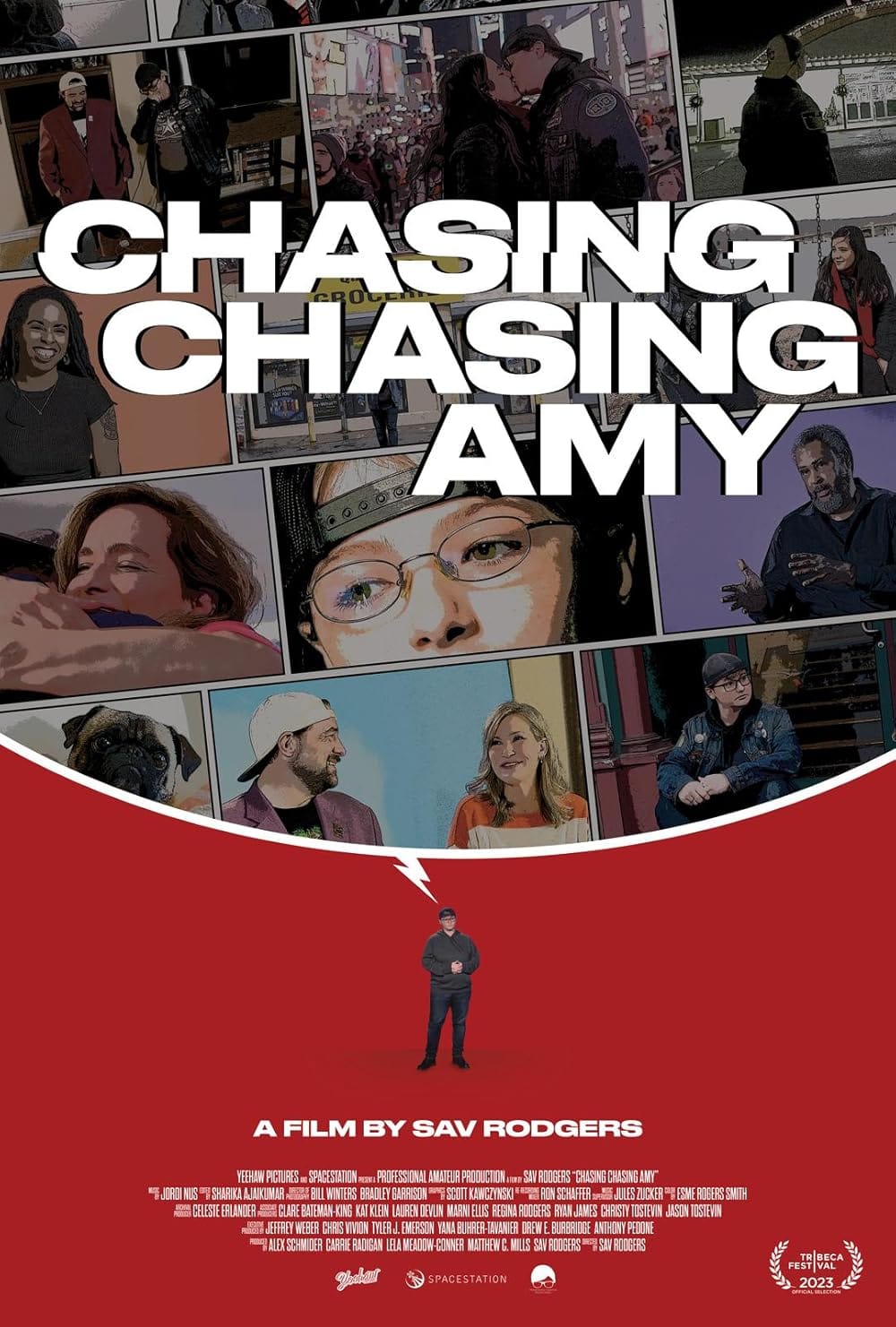
Next, let’s analyze the music in this film. The soundtrack includes music by The Diggs, Takka Takka, The Black Hollies, My Teenage Stride, and many others. The soundtrack (score included) helps, in my opinion, to define what this movie is all about. The score perfectly underlines certain moments in the film, and I will take a leap of faith and say that those moments were particularly chosen to be scored by the director for a reason. The soundtrack is alive and moves along with the characters and the story, never taking you out of the picture. If I had to compare it to another film musically, I would compare it to Kevin Smith’s ‘Chasing Amy’ (1997).
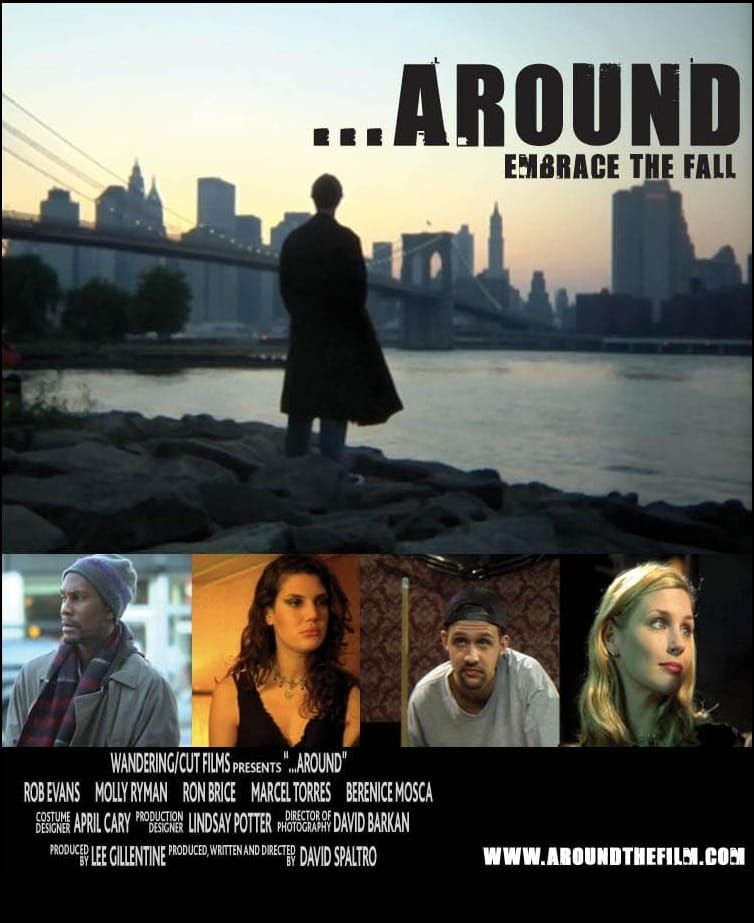
Now to the film itself. The first act is absolute gold and perfectly sets up both the main and secondary characters. The main character, Doyle Simms (played supremely by Robert W. Evans) is a wannabe filmmaker who moves from his broken-home Jersey burbs to the Big Apple to go to film school. Along the way he does what every college-age person does which is take odd jobs (namely as a waiter) and, with the help of student aide, pursues his dream. Soon after though, the money trouble starts. First with Doyle losing his student aide (which he remedies temporarily by juggling various credit cards). Overall, his plan fails, and he winds up sleeping in New York’s famous Penn Station. Along the way he Doyle meets various other characters including a love interest played by Molly Ryman, a homeless man who acts as a voice of wisdom for Doyle played by Ron Brice. Doyle as a character is as complicated as any Shakespeare character and as likable and charming as your current BFF. Doyle is smarmy and confident with a spirit and resolve that is not easily broken.
But break it does. By the third act of this movie, Doyle has been there and done that and taken his lumps, both figuratively and literally, trying to make a life for himself in the city. And as with any classic protagonist, he does have a fatal flaw, and that is pride. By not reaching out to those around him in the film for help, he puts himself farther and farther into a pit of despair. As the movie goes on you can see the punishment that the world has inflicted on the character. While I did think that the “mother issues subplot” was somewhat extraneous in the film (although the character of Doyle’s mother is played pitch perfect by Berenice Mosca), I can see why the director included it. Doyle was always told he was going to fail by his mother, and he was resolved to prove her wrong. And it wasn’t until his mother was on her deathbed that he finally received the closure he needed from her. Unfortunately, this was also the character’s lowest blow in the film, as her death signified the moment in which he felt the most abandoned, whispering for her not to leave him alone. One even has to wonder that if he ever had the family that he wanted (somewhat illustrated by a brief sequence), would he even be happy then? Or would he just be waiting for the other shoe to fall?
The last note I want to hit with this film involves the script. It was as impressively written as anything I’ve seen from the likes of such auteurs as Kevin Smith, or Woody Allen, or even Steve Martin. There is a bit of the third act that I thought got a little too didactic, but otherwise the dialog and situations were written as believable, polished, emotional, and witty. There were several jokes that had me laughing out loud, and other moments that had me almost man-weeping. (Okay fine, a tear or two might have been shed.)
Overall, the movie was shot very well, although you can tell at sometimes just where the budget of this movie was. The acting was very good, and I would believe that the actors/actresses could be cast in any major Hollywood role and come up roses. The editing was touch and go for me, but acceptable. And again, the music and direction are on par with anything that has come out of mainstream Hollywood in the past 20 years.
It was the Official Selection in the Big Apple Film Festival and made its ‘Friends and Family’ premiere on January 24th, 2008. The film has continued to garner praise from critics and fans alike. It would not surprise me in the least if this film didn’t get picked up for wider distribution.
For more information on the cast, crew, and production of this film, you can visit the movie’s site at Aroundthefilm.com