An Unlikely Weapon: The Eddie Adams Story
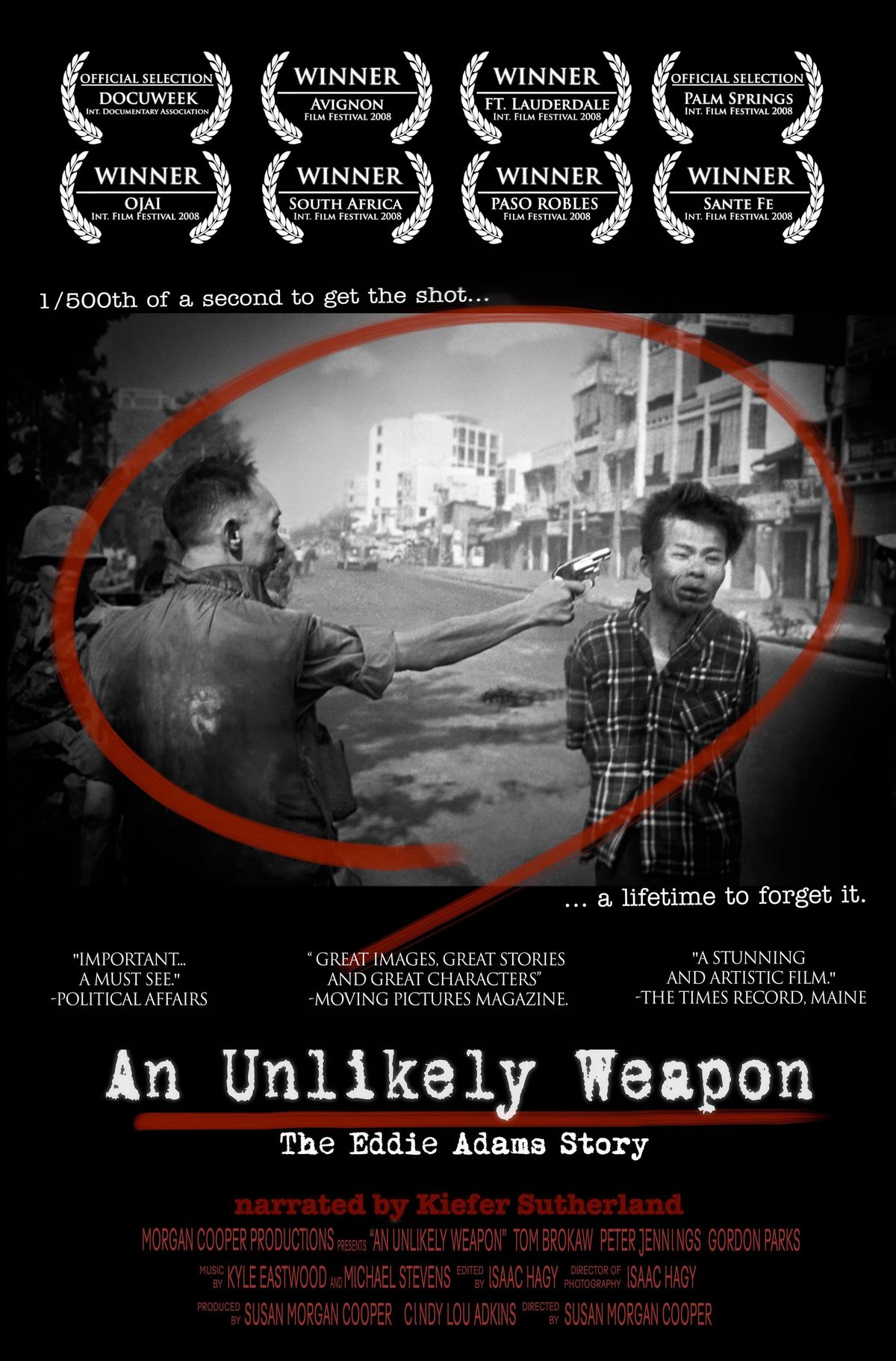
He has photographed thirteen wars, six American presidents and virtually every cultural and historic figure in the last fifty years. If you haven’t heard of Eddie Adams, you will recognize his Pulitzer Prize-winning photograph, the 1968 snapshot of Saigon police chief Nguyen Ngoc Loan shooting a Vietcong soldier in the head. Many, including his fellow photographers Tom Brokaw and Peter Jennings, contend that the unflinching brutal horror of this picture (along with the equally stirring image of Kim Phuc) helped end the Vietnam War. Adams’ assessment of his iconic image: bad lighting and a terrible composition. Adams never understood (or accepted) the monumental significance of his self-proclaimed snapshot, as Eddie would say, “Two lives were destroyed that day, the victim’s and the general”. But, as director Susan Morgan Cooper’s pedantic yet engaging documentary makes clear, three lives were destroyed.
Morgan focuses her documentary examination on Adams’ photographic biography, forgoing his pre-photographic life and upbringing, with the film’s narrative centering around Adams’ life before the 1968 snapshot as a brash but endearing AP photographer in Vietnam and his photographic career after the Pulitzer-Prize winning shot. This honest approach provides a compelling and poignant contrast of his existence before and after that photograph.
Unobtrusive walking down a New York street in his signature black fedora, his take on the meaning of a life’s work: “Nobody gives a damn, we’re all going to die, we’re disposable”. He swears (his favorite phrase: f8 u), often shaking his head in disgust and a cantankerous “pain in the ass”, Adams wears his disdain and pessimism on his sleeve, but his cup-is-half-empty attitude conceals (as well as reveals) a contradictory character, one of no B-Sing, the other is his ability to empathize and restore integrity to humanity through his work.
Morgan balances Adams’ customary self-criticism with a gallery of his (and others) stirring provocative images, confirming comments made by fellow photographers, family, friends and admirers that Adams was a man with an abundance of talent. But these images are a testament to what else this man has achieved (from his photos of President Ronald Reagan pumping iron to the graceful image Clint Eastwood’s back-turned photo for Unforgiven); there is more than this one snapshot; the images plead to let him be more than this one snapshot. But as the clips from movies, comics, newspapers and tv shows depict, the Saigon photograph has so woven itself in cultural consciousness – it is a symbol of suffering, brutality and (in the clip with David Navarro, who has the image enlarged in his house) a reminder to appreciate life, that despite Adams’ body of work (covering other wars, moving to a celebrity-focused career for Parade and later Penthouse) his commitment to his craft and developing the future of his craft, he will always be the man behind that one snapshot.
An Unlikely Weapon isn’t a seminal examination of photography or Adams’ life, but utilizing archive clips, photos taken by and interviews with Adams, and further interviews with friends and family, Morgan is able to convey his deep humanism and enduring empathy. Although the director never fully explores certain narratives briefly touched upon in the film (including Adams’ meeting with the general in the Saigon years later in his Virginia pizza parlor), but she never dithers from her subject, in turn creates a portrayal of a man racked with guilt for being privy to the last moments of a man's life. Ironically, for Eddie Adams, 1/500th of a second to get a single shot was all the time needed to change his life forever. An Unlikely Weapon is an honest exploration of Adams’ struggle to become more than this single greatest, raw accident; more than the legacy thrust upon him; more than this moment he couldn’t undo.